
Lost and Found
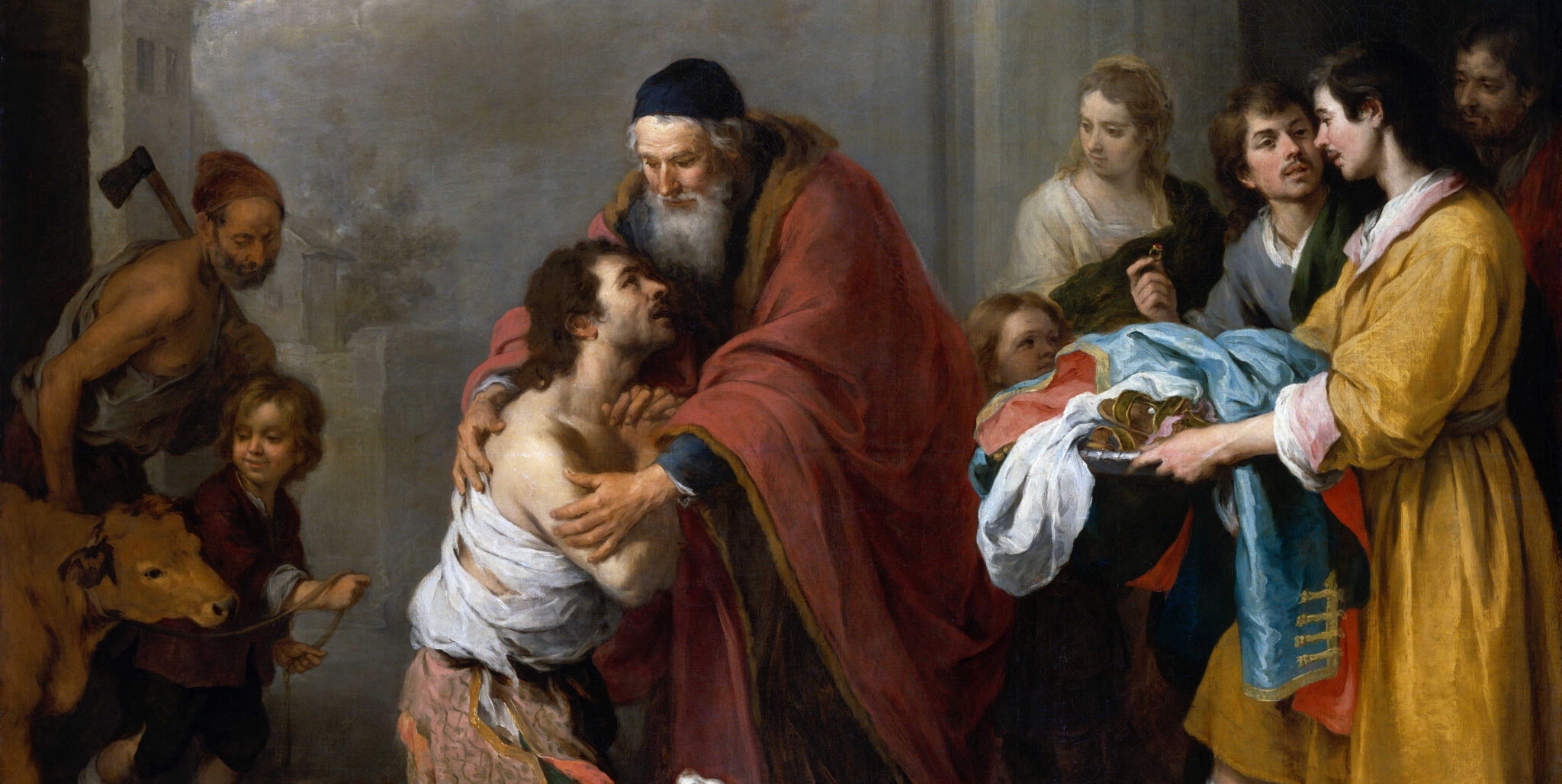
Luke 15:11-32
June 21, 2026 anno Domini
Lost and found. Dead and alive. Never and always. Those are the Words of the Lord in today’s Gospel reading. Let’s have at those words so that God’s Holy Spirit might find us, resurrect us, and so that our Father might always be with us.
Lost and Found
What does it mean to be lost? It means you don’t know where you are. You can’t find your way. In Luke 15 to be lost means that you are a sinner and you don’t know it or even if you know it you are helpless to find your way home.
Jesus tells three stories in Luke 15 about lost things – a lost sheep whom a shepherd finds, a lost coin that a woman finds, and finally the lost son whom his father finds. Each of those three lost things teach us about the nature of sin, being lost to God, and how He finds us.
The sheep tells us that sin is our own fault. The sheep wandered away. His eyes saw some delicious grass just over the hill. His thirst sucked him into a raging river. His curiosity got him tangled up in a thicket. You follow your passions – you lust and commit adultery, you are proud and you get angry, you covet and complain. Your heart, your eyes, your stomach lead you away from God.
The lost coin teaches us that we cannot “find” ourselves. That lost coin could not yell out to the woman – hey, I’m under the couch, covered in dust bunnies. It couldn’t wave it’s arms or whistle. When the woman finally moved the couch or pulled out her refrigerator, the coin could not brag, “Well, I’m glad I finally found you.” The coin does nothing to be found and you have no power to find your way out of sin and back to God.
Finally, the younger son teaches us that when you sin you take God’s place. The parable begins with that son saying to his father, “Father, give me the share of property that is coming to me.” To put it bluntly the son wished his father dead. He couldn’t wait for his dad to die. He wanted what his father had now – like Adam and Eve wanted the fruit God had reserved for Himself. Like Saul wanted to offer sacrifices even though he wasn’t a priest. Like David wanted Bathsheba whom God had given to someone else. Like you whenever you dishonor your parents or break the law or grumble because your neighbor is wealthier than you. Every sin is a first commandment sin – you take God’s place, you fear, love, and trust in you above God himself.
That’s lost. And God finds you. He is the shepherd who seeks out the lost sheep – even a stubborn, repeat offender like you. He’s the woman who moves the fridge, pulls out the stove, goes into the darkest, dirtiest corner of the cellar to find you. Christ went to the depths of hell on the cross – suffering your eternal punishment to rescue and deliver you. He took the mess of your sins and went into the darkness of death to grab hold of you. It doesn’t matter how lost you are, Christ goes there for you.
Now you might want to argue with me when I say that the father finds the lost son in the parable. It certainly reads like the son found his way home and found his father again, but look at verse 17. It’s the turning point for the son. Jesus says, “he came to himself.” What caused the younger son to come to himself? To realize he didn’t need to be lost in the pigsty of his own lust? He didn’t come to the realization on his own. The deeds of his father came to mind. He remembered not just his father, but that his father was gracious, even to the servants, even to those less than a son. He would never have “come to himself” or found himself on the way home, had his father not been a kind and gracious man and demonstrated and taught that to his son. His father’s words and deeds found him in that pigsty and his father’s grace and mercy led that young man to head home.
You’re here this morning for the same reason. Would you dare say, “I am by nature sinful and unclean. I have sinned against You in thought, word, and deed, by what I have done and by what I have left undone” if you did not know your Father in heaven to be gracious and merciful, if you did not know that the blood of Jesus Christ cleanses you from sin, that your Father desires every one to turn from his sins and live, that heaven rejoices over one sinner who repents. A Lutheran should never say, “I found God.” No, God found you, sought you in Christ, and urges you to turn from your sins and live in the forgiveness He alone gives.
Dead and Alive
That’s lost and found, and that’s the most important pair of words in the parable. The second set is like it – dead and alive. The father rightly diagnoses his younger son – when he was away from home, he was dead. When he was back in his father’s arms and love he was alive.
I don’t think the son realized the extent of his sins or his father’s love, until he finally returned home. The boy did not think he was completely dead, just mostly dead. He had a plan to resurrect himself back into his father’s arms. He knew what he was going to say, “Father, I have sinned against heaven and before you. I am no longer worthy to be called your son. Treat me as one of your hired servants.” The son mistakenly thought he could raise himself back to life. He would work his way up from a servant to a son, from mostly dead to alive, but his plan failed.
He made the first part of his confession, “I have sinned against heaven and before you. I am no longer worthy to be called your son.” But then his father cut in. As if to say, “You’re right. You did sin. You’re not worthy to be my son and there’s nothing you can do about that. You’re dead to me. So let me resurrect you – bring the robe, put my ring on his finger, sandals on his feet, sacrifice the fattened calf. What kind of a party would you have if your dead son was brought back to life? Ask the widows at Zaraphath or Nain, ask the disciples when Jesus appeared alive to them, or the angels in heaven celebrating when you confess your sins and receive forgiveness. You came to church dead this morning and now you are alive because God in Christ has forgiven you. Shame on you if you’re bored with the resurrection, bored with forgiveness, bored with worship – maybe you have forgotten how dead you are.
Never and Always
The last pair of words is never and always. These are words about the older son, big brother to the lost and found boy. The older brother claims that he never disobeyed his father’s commands and that his father never gave him a goat to feast with his friends. You know this older son is a liar, because when you use “always” and “never” you’re lying. You use those words to justify whatever sin you’re committing. Just like the older brother was trying to defend his disgust with his younger brother. That no good, money grubbing, reckless living, wasteful loser gets a party, and you have never given me a goat even though I have never disobeyed your commands.
I don’t want to rehash the sermon but the older son is as lost as his younger brother was. The younger son was lost in his sins. The older brother was lost through his pride. He thought his father’s love was something he earned through his works. He forgot that a good father’s love is simply that – a love for his son because his son is his son.
Only God can use the words always and never truthfully, as does the father in the parable, who wants his older son to be found as much as his younger, “Son, you are always with me, and all that is mine is yours.” God wants you with Him – always. He wants you to have all that is His. You’re lost and He would find you. That’s why Christ died for your sin and rose again. He has been seeking you since the moment of your conception. He has not stopped baptizing, preaching, and inviting you to His table, that He might raise you to life from the death of your sins. Lost and found. Dead and alive. Never and always. Those are the words of the Lord for you. In the name of Jesus.