
We Love because He First Loved Us
1 John 4:16-21
June 7, 2026 anno Domini
So, who do you look like? It’s always a question with children or grandchildren. He’s got his mother’s eyes. He’s got his dad’s nose. Dimples run in the family.
Last Sunday God’s Word taught us the essence of God – that He is three persons in one God – Father, Son, and Holy Spirit. Today we learn the character of God. No one says it clearer than Saint John in today’s Epistle reading, “God is love.”
So, this is the question for you today. Do you look like your Father? St. John says we do. We love because He first loved us.
That sounds so simple. To quote John Lennon “All you need is love.” But just as God defines who He is – that mysterious Trinity – three persons in one God, so also God defines what love is – and love isn’t what the world thinks it is.
The first part of God’s definition of love is found in verse 16. Saint John calls it “the” love. We have come to know and to believe THE love God has for us. The is called the definite article and it makes a thing specific, unique, different than anything else. Whenever you put “the” in front of something you’re singling one particular thing out.
Consider a simple expression like “Get the door.” You’re referring to a particular door – maybe you want the car door opened for you, or the garage door closed, but when you say “the” door the person hearing you knows you’re referring to something specific. You would not be understood at all if you said, “Get a door.”
Or think of the difference in saying faith or the faith, God or the God, church or the church. It is quite safe to say, “I believe in God.” But to confess “I believe in the God” means you don’t think there are multiple gods, but one unique particular God – the God of Holy Scripture, the Father, Son, and Holy Spirit and He isn’t just any old god.
Although it isn’t translated in English John writes love the same way in verse 18, “There is no fear in the love, but the perfect love casts out fear.”
So, what is “the” love John is referring to here? What is the unique, specific, distinctive love God has for us? I’ll give you a hint. What’s the most familiar passage about God’s love in all of Scripture? We heard it last Sunday when Jesus said to Nicodemus, “For God so loved the world, that he gave his only Son, that whoever believes in him should not perish but have eternal life.”
God’s love is not some general feeling of attraction towards you, like you might have for cold, sweet watermelon on a hot summer day. God’s love is specific – His love acts. His love works. His love carries Him to meet your greatest need. He forgives you in the death of Christ so that you are not left to die in sin and be alone for all eternity. He loves you, not because you’re lovely or a great addition to His household, but because His heart is set on what is best for you and what is best is that you are forgiven, you are His, and you know His love. A few months ago, I heard love defined this way – love desires what is best for the other. This is God’s love. He wants the best for you and Father knows best. He wants you to be forgiven, to be safe from your enemies, to be with Him.
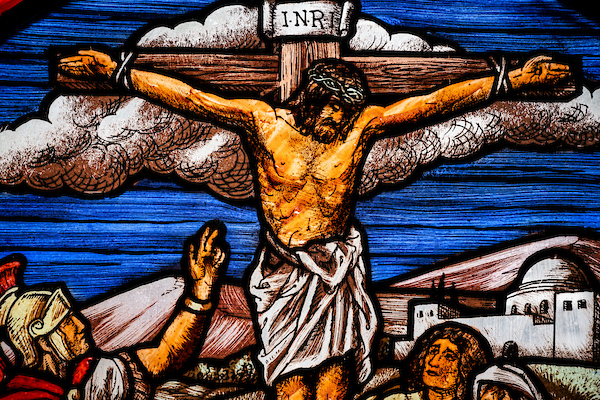
Next John calls this love of God – the “perfect” love. The Greek word for perfect means finished, complete. There’s no more work on this love to be done. It’s related to the last word Jesus said from the cross – it is finished – done, completed.
This is why you need fear nothing – up to and including death, up to and including standing before God on judgment day. His love for you is finished. There’s nothing to be added. There is nothing about you, in you, with you, that He has not forgiven, cleansed, loved with His unique love. There’s nothing about you that is outside of His love. How do you know? Jesus said so, “It is finished.” And since He rose from the dead you can trust Him.
There is nothing to fear – not your worst sin, not the Devil’s grossest accusation – either true or false, not your past, not your future, not your acceptance or rejection by the world, not your success or failure. The perfect love of God casts out that fear.
You fear judgment. Mostly you fear the judgment of the world, but also your judgment of yourself. Every one of us wants to be loved, valued, appreciated. We want to feel good about what we have done or are doing. Our need for this was built into us by God’s creation – He created us to receive His love, to be valued by Him, to live with Him and with each other. The first sin of Adam and Eve and your ongoing sin destroys that. We judge others. They judge us. We judge ourselves. And that leaves us in a pile of fear – alone, filled with doubt, guilt, shame, anxiety.
Hear these words from John again, “There is no fear in love (and remember that’s the love – the love God has demonstrated for you in Christ), but perfect love, completed love, the “it is finished” love of Christ on the cross, casts out fear.” As one old Lutheran preacher (Lenski) said, “This love has removed all your sins; what is there left to make you afraid? … His love pulls this fear of judgment up by the very roots and throws it out as though it were a poisonous weed.” God loves you. That judgment is greater than the world, yourself, and the Devil.
Do you look like your Father? We love, because He first loved us. Your love should look like your Father’s love. Love deals with sin. It doesn’t tolerate it, excuse it, overlook it. It is not love not to say something to your granddaughter living with her boyfriend or your daughter who doesn’t go to church. You don’t have to be mean about it or rude – that isn’t loving either. Speak the truth in love – that’s looking like your Father.
The harder side of love is to forgive. That is why Saint John uses such strong language. If anyone says, “I love God” and hates his brother, he is a liar.” When you are sinned against the Devil would simmer you in that sin and hurt until you boil over and hate. God is love. The Devil is hate. The Devil’s greatest joy is if you, in your heart would damn someone, put them beyond God’s forgiveness.
Forgiveness is hard. It is costly. Likely the greatest sinner against you is someone closest to you. Their sin might be great, or frequent or the same old annoying sin. This is how you love. Forgive the person in your heart – even as God in Christ has forgiven all the sin of all the world. Then call the person to repent – even as God through His Word calls us to repent. And should the person repent – love them by speaking that forgiveness, even as the Holy Spirit has delivered it to you this morning – all the forgiveness for all your sin.
That’s the love of your Father. Look like Him. Love each other, because He first loved you. In the name of Jesus. Amen.