
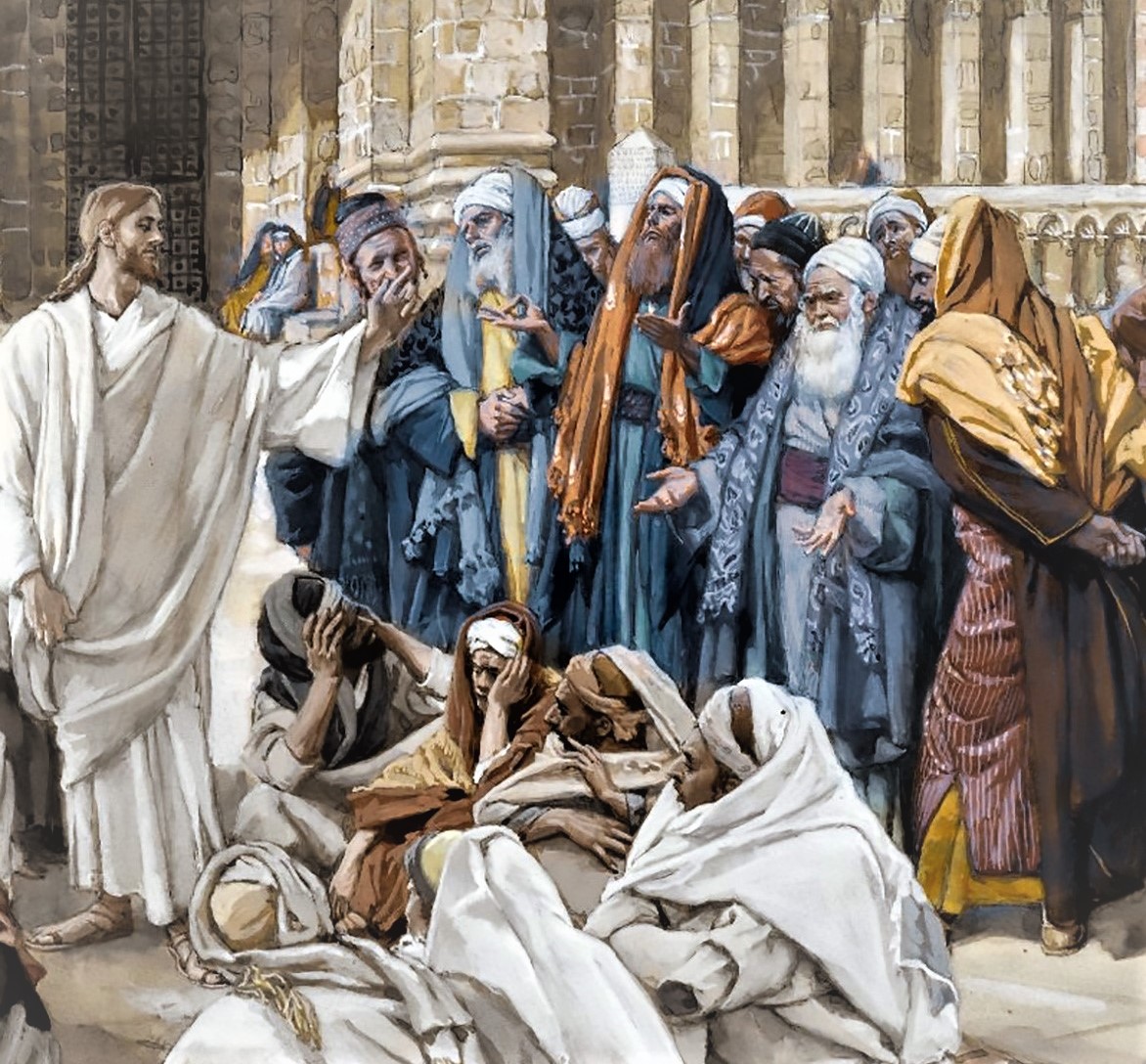
Vindication
John 8:46-59 & Psalm 43:1
March 22, 2026 anno Domini
A few years ago, a fellow pastor called me and he was troubled. He was praying his way through the Psalms and he had come to Psalm 26.
Vindicate me, O Lord, for I have walked in my integrity, and I have trusted in the Lord without wavering. He said, “I can’t pray those words. I haven’t walked in integrity. I’ve let things slide in my family and my congregation. I’ve kept quiet to keep the peace. I have not trusted in the Lord without wavering.”
The introit for today begins with those same words – Vindicate me, O God, but then the Psalmist gives a different reason for vindication – defend my cause against an ungodly people.
But is that any more likely a reason for God to vindicate you, to judge in your favor? Are you godly and everyone opposed to you ungodly. Isn’t it more likely that your thoughts and deeds over the last six days, even as you sit in the Lord’s house would be revealed as ungodly.
Vindicate me, O God. That’s what you want. It’s what I want. We want God on our side, to judge us favorably. And that’s what this Fifth Sunday in Lent is all about. Judica – judge me, O God. Vindicate me. Find me right.
So why do you want to be right? Why will you argue the smallest point in a conversation that doesn’t matter? Why do you want people to agree with you? Why are you upset when your furnace quits on the coldest morning of the year or your check engine light comes on right before the big trip? Why does your anger flare in an instant when you are wronged? Why do you want God’s approval even when you know you don’t deserve it?
You should take your desire for vindication as evidence of two things. First, that you were created in the image of the holy and righteous God. You have an inborn sense that there is a right way and a wrong way – that things should work in the way they were intended. That inborn moral compass is a sign of your creation by a righteous and orderly God.
Second, your frustration that so much goes wrong, should teach you of your sin. Whenever you cry out to the Lord to set things right, you should also confess all the wrong you have done. Your sin has caused all this harm, brokenness, and failure of the good and righteous world God created.
In today’s text we hear two requests for vindication – one from man and one from God. And throughout the Bible it’s always those two solutions competing for our faith and trust.
The Jews put their trust in man. They trusted in Abraham. “We are offspring of Abraham,” they boasted. “Are you greater than our father Abraham?” they asked Jesus. But their trust was in the flesh of Abraham and not in the faith of Abraham. I’m not sure what I could compare their confidence to, but it might be like someone saying, “I’m a Missouri Synod Lutheran” but never going to church, never reading the Scripture, never trusting Jesus to the point where He makes any difference at all in your life, your behavior, your finances. You hold to an outward connection, but there is no inward change. There’s no significance to your faith.
The Jews beg the question of us – in whom do you trust? Do you look to yourself to set things right? Or to some political system? Some church institution? Some human power or wealth or experience? Do we just need the right humans in the right place? Is your hope according to your flesh or to faith in Christ? Repent.
Jesus begins the text with a question of the Jews. It’s a question which invites their judgment. Which one of you convicts me of sin? If you desire vindication. If you want things set right, then you’d better put your hope in Someone who is righteous. And there’s only one man to look to – Jesus of Nazareth – a man, like us in every way, except for this – He is without sin.
Jesus could pray Psalm 26 and Psalm 43. He walked in integrity. He trusted in His Father without wavering. He was Godly among an ungodly people. If you want things set right, if you want to be right, if you want God to look on you with favor, then your hope begins, continues, and reaches its fulfillment in Jesus.
I’ve been reading the Gospel of John in my daily Bible reading and it struck me how every chapter of John’s Gospel shows this contrast between wrong and right, evil and good, brokenness and healing, man’s failures and God’s success in accomplishing what is right and good and true.
In John 1 Jesus is proclaimed as the light shining in this dark world, but then John laments – the world did not know him. He came to His own people, but His own people did not receive Him.
In John 2 Jesus goes the wedding at Cana where they have run out of wine. We can only imagine the hosts of the wedding trying in vain to remedy the problem. Only Jesus can make it right and He does so graciously.
In John 3 Nicodemus seeks the Kingdom of God and Jesus tells him he must be born again from above. Nicodemus doesn’t get it – he thinks according to the flesh wondering how a grown man could re-enter his mother’s womb. Jesus is talking baptism, the work of the Spirit, not something you can do, but something God the Father does through His Son by the Spirit.
In John 4 Jesus meets the Samaritan woman at the well. Now you want to see someone whose life is all wrong – married five times and shacking up with a guy she is not married to. What does Jesus do? He sits with her, talks with her, proclaims Himself to her. She had tried to fix her life with a whole bunch of men, but in the end, there was only One man who could give her the love she needed and set her life right, and that was Jesus – dying for her sins, calling her to repent, leading her to a holy and righteous life.
In John 5 Jesus gets in trouble because He heals a crippled man on the Sabbath. The Jews thought that the right way to keep the Sabbath was not doing any work. That’s only half of what the commandment means – the other half is to have Jesus work on you in the Divine Service. That’s what Jesus did for the lame man – He healed the man and forgave the man and directed the man to live a life of repentance.
I’m not going to finish the remaining 16 chapters of John but you could. In every chapter you see your failure, your troubles, your sin, and one and only one answer. Jesus of Nazareth, the Word made flesh, the Son of God and the son of Mary.
You want things to be right – then look to Jesus of Nazareth on the cross, judged guilty for your sin, taking your hell and your death, that you might be justified before God. Look to Jesus of Nazareth being raised from the dead, and appearing to Mary Magdelene, declaring peace to Peter and nine of the Apostles, and then inviting Thomas to touch His scars and believe that He is Lord and God.
It is only in Christ that you dare to pray, “Vindicate me, O Lord” because in Christ God has vindicated you. He damned His Son so He could favor you. He judged Jesus so He could acquit you. You are right with God. In the name of Jesus. Amen.