
Faith and Epistemology
St. Luke 18:31-43
February 11, 2024 anno Domini
Today is Quinquagesima and we’re going to talk about Epistemology. That’s a five-syllable word followed by a six-syllable word so I’m sure you’re excited and impressed with my vocabulary.
Quinquagesima means fiftieth which means in 50 days we will be close to Easter. Epistemology – all six syllables of it – really isn’t that difficult. It is simply the study of how you know what you know? So how do you know what you know? You know things by authority. My dad told me. My boss told me. You know things by experience (it worked last time it will work this time), by common sense (everyone knows that), by observation (seeing is believing), by senses (I know someone hit a skunk because I smelled it.) and by other things like logic and revelation.
Today’s Gospel reading teaches us of faith, and when it comes to faith, when it comes to Jesus our epistemology is challenged. For instance, reason would tell you that if God is on your side and He is a good God then if you follow Him you should have a good life. When a Christian mother miscarries, or a young Christian father is killed in an accident your reason and experience challenge your faith. Your epistemology is questioned. How do you know God is good or on your side?
When Jesus tells the twelve (and for your information this is the third time he tells them). We are going up to Jerusalem … and the son of man … will be delivered over to the Gentiles and will be mocked and shamefully treated and spit upon. And after flogging him, they will kill him, and on the third day he will rise” when Jesus told them that, they didn’t get it. It didn’t compute. It didn’t fit their epistemology. They had seen Jesus heal sick people, raise a woman’s son from the dead, calm a storm, and cast out demons. Peter, James, and John had seen Him miraculously transfigured, His divinity shining right through His flesh. They believed He was the Christ of God, and everything pointed to a great and glorious future. He wouldn’t be mocked. No one would spit on Him. He was God’s Christ. He would usher in a glorious new Kingdom, and they would be the 12 princes of His royal court.
What happens when God’s Word goes against your experience, your common sense, your observation? What happens when God’s Word goes against the authorities in your life or even worse your own authority? What happens when your epistemology is called into question? You know the answer – go with Jesus. You’re not god, even though you want to be. You want to tell God how He should act because you know.
Three times Jesus predicted His suffering, death and resurrection. St. Luke tells us with threefold emphasis the disciples were in the dark.
But they understood none of these things.
This saying was hidden from them,
and they did not grasp what was said.
Jesus knew how they would respond to His words. The 12 were worse than most husbands. You tell your husband something three times and he’s likely to get it. Three times Jesus had told them, and they understood nothing. Do you know what Jesus in His mercy did? He took them to Jerusalem. He included them in His plan. He began His little speech by saying “We are going to Jerusalem.”
They would soon know that the suffering and dying of the Christ was exactly what needed to happen. They would know that the death of Jesus of Nazareth was the center of their faith. He would take them with Him. He alone would go to the cross, but they would see Him arrested, whipped, spit upon, nailed to the cross. They would see Him die and hear His last anguished scream as He gave up His spirit. And they would see Him risen from the dead and they would remember what He said.
They would not only believe, but they would preach Christ and Him crucified to the world. Their sermons were foolish. One man on one cross takes away the sin of the world. God takes on human flesh and God dies. A man rose from the dead. It makes no sense. It’s not our experience. It’s contrary to logic. I’ve never seen it, but they saw it. They believed it and they preached it, and because they did, you have now heard it. In the end they knew it because they saw it.
Here’s what we learn from the 12 about faith. We will see what we believe in the end. This morning, I proclaimed to you that your sins are forgiven. You don’t feel that. You don’t see it. You’ve probably sinned a hundred times since I’ve said it. By all your epistemological standards it is “not true” and yet you said, “Amen. Yes, it is so.” Why is it so? Because the Man who died on the cross rose again and He said so and on the last day you will see, like the Apostles saw, it is so. You will rise bodily with no sin, with no desire to sin, with the love described in 1 Cor 13. Now you know by faith and live by hope, but then all you will experience is love – God’s love for you and God’s love in you.
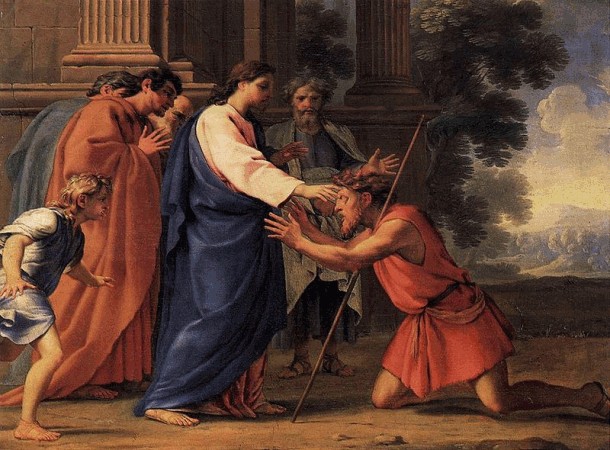
As the 12 headed to Jerusalem with Jesus they met a blind guy and he teaches us about faith here and now. The blind guy was in the dark. He couldn’t see. All he could do was hear – and that’s a lesson for your faith. Don’t look. Hear. Your eyes will betray you. All that glitters is not gold. All that promises is not god – only Jesus is.
The blind guy had ears to hear and hear he did. He heard the news of this Jesus of Nazareth – a guy who raised the dead, cast out demons, healed the sick, and could command nature to obey. He heard the crowd gathering and he knew something was up. He asked what all the commotion was about and the crowd told him, “Jesus of Nazareth is passing by.” That was the best Word he could ever had heard. That Word was his hope. That Word was his faith. It’s all his ears ever wanted to hear and needed to hear. If you don’t hear Jesus in my sermons, transfer your membership. Get out of here. There’s nothing here for you if you don’t hear about Jesus and if you don’t hear of His cross.
The blind man saw with his ears. He didn’t need his eyes. He knew from the Word that Jesus was who he needed and what he needed. He also knew from the Word that Jesus wasn’t just a miracle worker. He knew that Jesus was David’s Son and David’s Lord – true man and true God. He called Him “Son of David” as he cried out for mercy. And the more people tried to silence him the more he shouted out.
It’s a question that must be asked of every Christian. Do you want Jesus? He comes with a cross. He comes with suffering. If you’re his disciples you’re going to go where He went. You’re not going to be free of suffering, mockery, spit, and scorn. You’re not going to be without threats. It’s possible you could die because of Him. Are you willing to go with Him?
Then, you need to be blind whenever Jesus challenges your epistemology. You need to see with your ears like that blind guy outside Jericho. When the crowds of this deadly world try to silence you, you need to cry out all the louder. Remember what Jesus said when you were confirmed or when you joined this congregation, “Whoever confesses Me before men I will also confess before My Father who is in heaven.” If the blind guy remained silent he would never have seen and many others might not have seen Jesus as their Savior without this miracle.
We’re fifty days out from Easter and we’re going with Jesus to Jerusalem. Keep the faith and you will see what He promised. Hear God’s Word and use your ears to govern your epistemology. That will preserve your faith, hope, and love in the name of Jesus. Amen.