
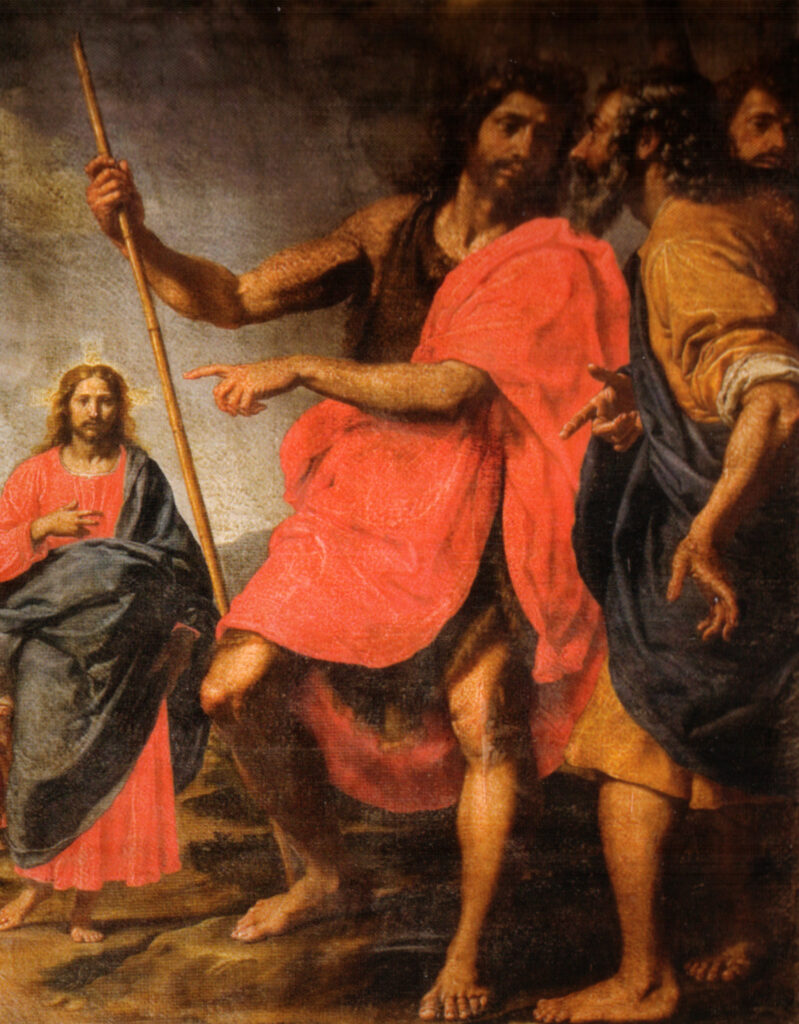
 Who Are You?
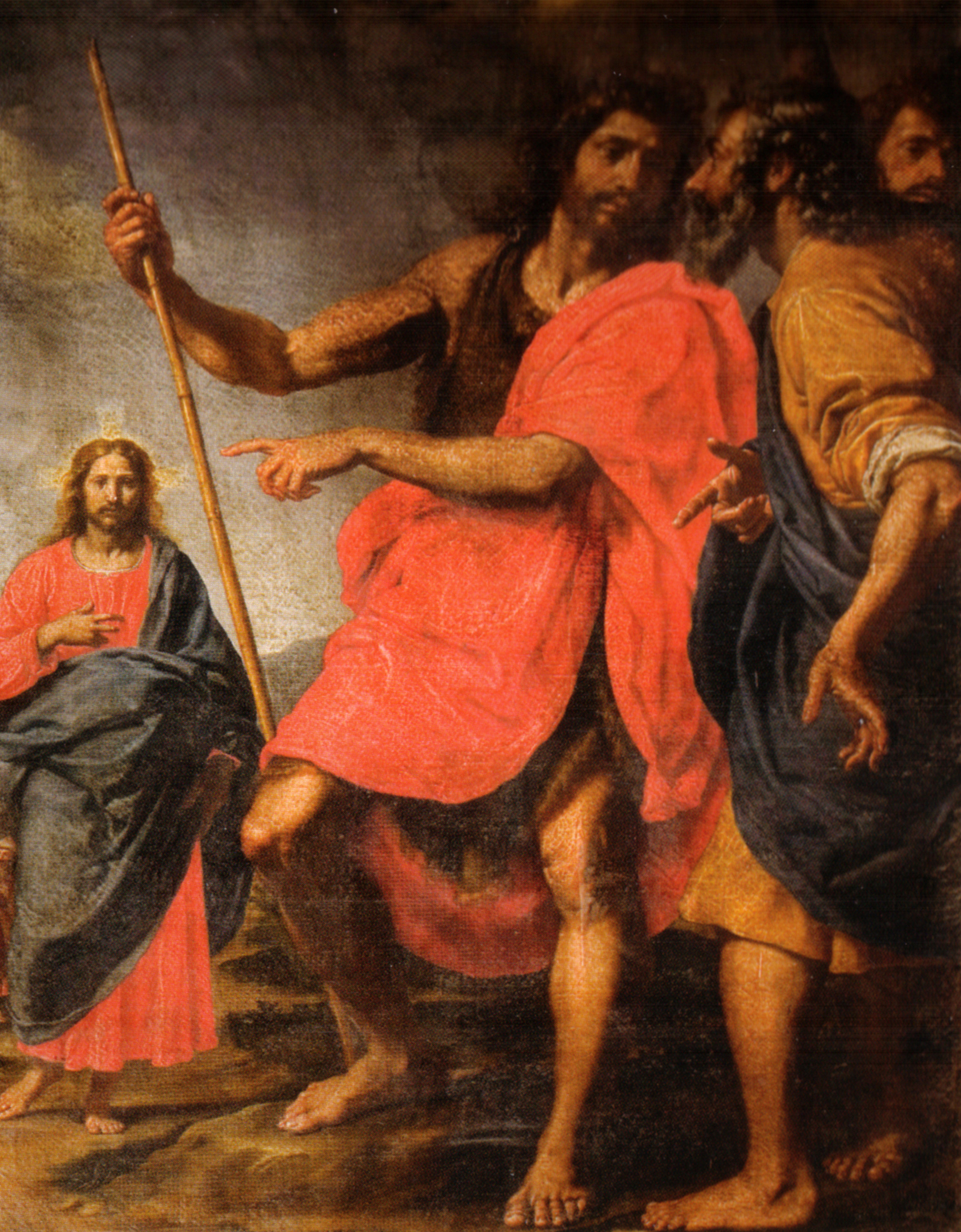
John 1:19-28
December 20, 2020 anno Domini
The people were looking for a sign. It had been 450 years since God had spoken to his people through a prophet. The people were waiting. The whispers of God’s Word were once again being heard. The priest Zechariah and his wife Elizabeth had a son in their old age. A young virgin from Nazareth gave birth to a boy in Bethlehem. Wise men from the East had been seen around Jerusalem and Bethlehem. King Herod was so disturbed by these events that he murdered a dozen or so infant boys in Bethlehem. Something was up.
Then there was silence again for about 30 years, until John, the son of Zechariah and Elizabeth went out into the wilderness. He dressed like Elijah the forerunner of the Christ. He spurned the palaces, the pleasures, and the power of Jerusalem. John the Baptist was weird. No matter how desperate your congregation was for a pastor you would never have called John, but his weirdness attracted people. The God of Holy Scripture is weird, so maybe John was a sign that the Lord was about to speak again.
The pharisees were not only looking for signs. They wanted to interpret them for their advantage. Maybe Elijah had come back or the prophet like Moses but greater than Moses had arisen. Maybe John wasn’t the sign. Maybe he was the Christ, so they sent to some priests and Levites to ask John, “Who are you?”
Have you ever been asked “Who are you?” Have people thought you were so weird or out of place that they asked, “who are you?” Have you ever been asked this because you were acting like a Christian, because people saw something in you that they see nowhere else in the world? Wouldn’t that be the greatest honor a Christian could receive – that others see you live so differently as a Christian, that they have to ask you like they asked John, “Who are you?”
[John] confessed, and did not deny, but confessed, “I am not the Christ.” The Holy Spirit made sure that we did not miss John the Baptist’s answer. The Spirit inspired John the Evangelist to triple the verbs. Instead of one simple “he confessed,” we’re given three verbs – He confessed and did not deny, but confessed. It’s like when I come home from fishing and my wife asks, “Any luck?” I say, “Zero. Zip. Nothing.” to make sure she understands what the word skunked means. [John] confessed, and did not deny, but confessed, “I am not the Christ.” How tempting for John to deny Christ? He could have denied Christ by claiming to be Christ. Remember the Jews were hoping for a political Messiah. John could have been swept up by the Pharisees, launch a campaign to “Make Israel Great Again” and the Jews would have revolted behind King John the First.
You face the same temptation to deny Christ, by taking Christ’s place. Oh, you probably would never claim to be God in the flesh or King of the World, but you take Jesus’ place. Whenever you think you deserve something better from God, whenever you don’t like the way God runs His Kingdom, whenever you complain, you take your Savior’s place. In His Son God has loved you perfectly and graciously. He has forgiven your sins and paid for your death with Christ’s flesh and blood. When your faith or contentment or hope is judged by your experience rather than Christ’s death you deny Christ.
John was not the Christ. “What then? Are you Elijah?” John said, “I am not.” “Are you the Prophet?” And he answered, “No.” John could have confessed “Yes.” He was the forerunner of Christ, the Elijah to come. He was a prophet greater than Moses because he was the last prophet, but so as not to confuse the priests and Levites and not to take any glory from Christ, John says, “I am not Elijah. No I am not the greater Moses.”
Here we learn from John that we can deny Christ by an unclear or incomplete confession. Have you ever tempered your words when speaking of the faith? Soft peddled your “personal” beliefs so as not to offend your uncle or sister or friend? Have you ever spoken the truth of God’s word in such a way that you could understood it one way and others could swallow it easier in their way. That denial might be as simple as confessing, “I believe in Jesus.” Even the devil would swallow that one, but if you confessed, “I believe that Jesus is the only Savior from sin” you have given a better confession, but it might cost you. First you used the word only – which is true, but not acceptable to the world. Then you used the word “sin” which is also true, but judgmental.
The priests and Levites wanted John to be something, but John confessed he was nothing. “I am the voice of one crying out in the wilderness, ‘Make straight the way of the Lord.’” I’m just the preacher. I’m nothing, but the called and ordained mouth of God. Don’t look at me, but get ready for the Lord. He is on His way.
Here we find another way to deny our Lord. We point others to ourselves instead of Christ. We might talk of the great things God has done in our lives, how faith has been such a blessing, how our 1.7 children turned out above average, how we’ve reached old age without a serious illness, how we survived COVID when we were told it was a certain death sentence. But God does not promise those things. You might die of COVID. Your children might rebel against God and not believe. Your grandchildren might never hear the name of Jesus in their homes. So confess Jesus to them. Don’t look at me. Look at Jesus. He is the evidence of God’s love. He is Savior you need. His forgiveness takes away your sins and grants you eternal. Your problem is not your job or your marriage or your childhood. Your problem is you are a sinner and you broke God’s good creation and that’s the reason for this mess. You need Jesus. He died for your sins and then walked out of the cemetery. Follow Him. Believe in Him and you will be saved.
The priests and Levites are so frustrated that John is not who they want him to be that they press him, “Then why are you baptizing, if you are neither the Christ, nor Elijah, nor the Prophet?” Why does John baptize? Because of Jesus and because of these priests and Levites. “I baptize with water, but among you stands one you do not know, even he who comes after me, the strap of whose sandal I am not worthy to untie.” John was baptizing to prepare people for Jesus. He was preaching repentance and people were repenting and being baptized for the forgiveness of their sins.
Here John teaches us why we confess and do not deny Christ, why like John we are signs that point to Christ alone. We do so because we love Jesus, and we love our neighbor. This is the Christian faith – Christ Jesus died for your sins. He has forgiveness when all you have is sin. He opened heaven for you when you were headed for hell. His death and resurrection give you eternal life when you are in a death spiral. We believe that we are justified (declared righteous) by grace for Christ’s sake through faith. That justification means a certain hope, a certain resurrection and eternal life with God. The Christian’s faith produces great love for God.
It also produces great love for our neighbors. Would it be loving to bring a Christmas beverage over to your neighbor mixed with poison? Or to bring them some meat that was tainted? Or give them a gift that appeared good, but was in reality dangerous because it was defective? You would never do that, so do not deny Christ. Don’t confess yourself instead of Christ or confess part of Christ, or muddy the truth of Christ so you don’t hurt or offend your neighbor. That would be as unloving as putting their life in danger.
Learn from John to confess and not deny, but to confess exclusively the full, true, and saving name of Jesus. Amen.
I was led to believe in Sunday school and by hundreds of times of hearing the Christmas story in several different MO Syn Lutheran Churches over the past 76 yearsw, that the number of baby boys massacred by Herod was very extensive, ie. hundreds. To hear you say in this sermon that it was “a dozen or so” was very shocking to say the least. Shocking because it does not agree with all of my past church services and also shocking because of the phrasing “or so” which is generally used to “minimize” something. I googled what the approximate population of Bethlehem was at that time and was given the round number of 25,000. It seems to me highly unlikely that in a city of that size there were only “a dozen or so” baby boys under 2. Why has the usual presentation of this Bible story changed this year?
I based my comments on respected historians and commentaries. A couple of examples. R.C.H Lenski – for many years the “standard” New Testament commentary series for Lutherans writes “the numbers of boys is placed at six to eight’ others go up to thirty.” Paul Maier, noted LCMS historian, has also commented that Bethlehem being a very small town would have had a small number of boys. I believe he is the one who said, at most a dozen. This does not diminish the horrific crime of Herod, but we must be accurate to the history / archaeology. I do not know where your pastors got their information, but now you know my sources. We always need to be cautious speaking where Scripture does not speak – so remember neither your past pastors (nor your present pastor) know exactly how many boys were killed, therefore we should be mindful when we speak and also have researched why we say what we say.