
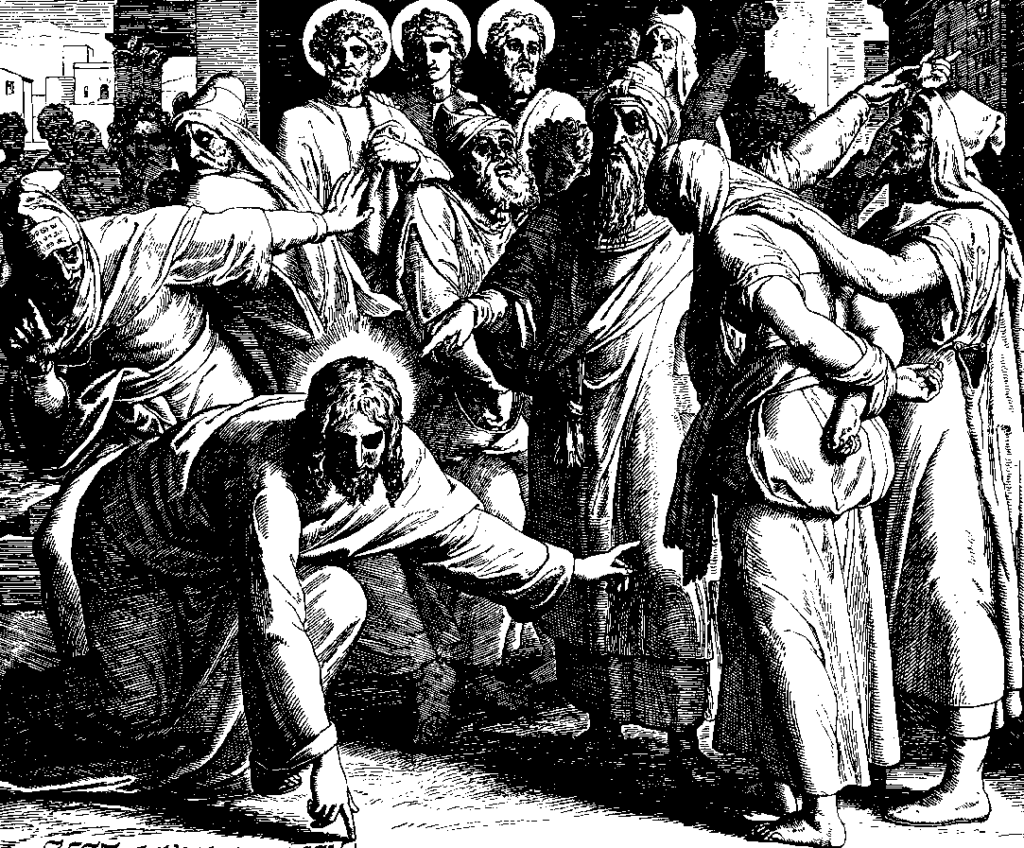
 “Judgment”
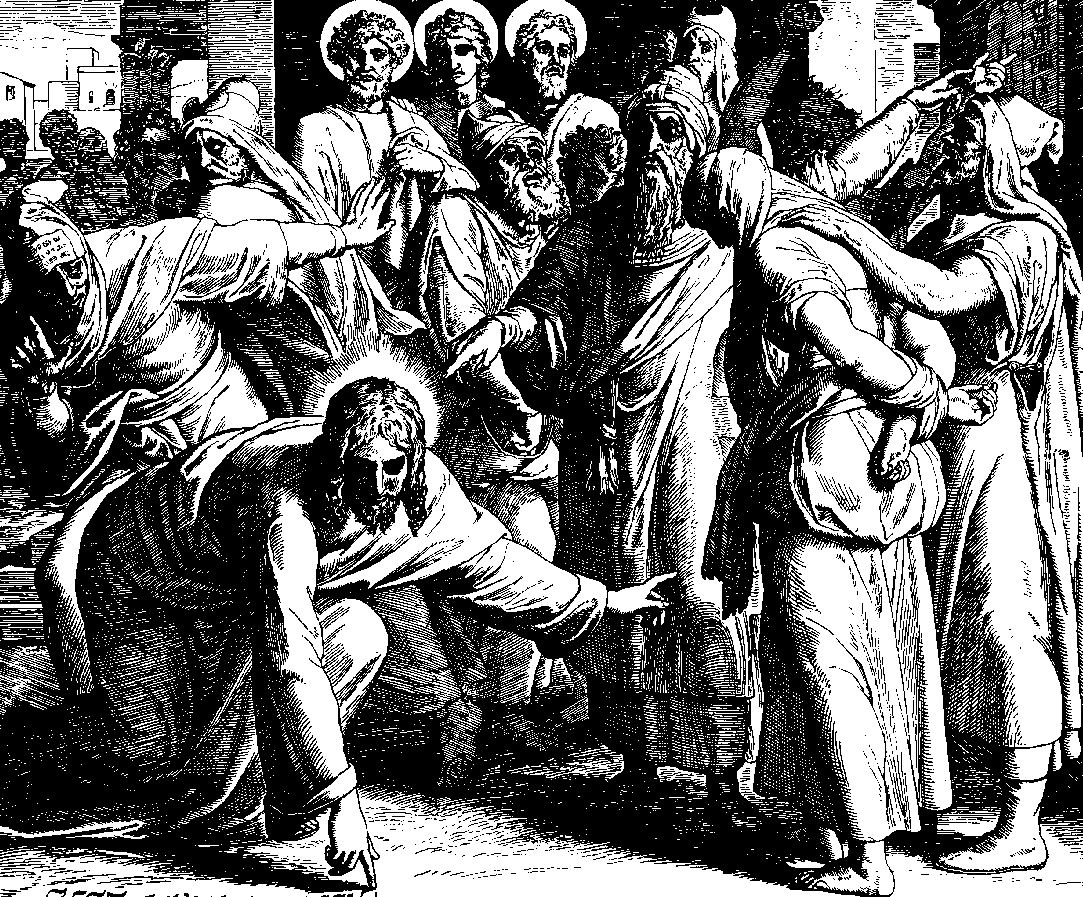
The Savior for Suffering Sinners
February 26, 2020 anno Domini
Sin is a nasty. It’s more destructive than any disease. While there are many consequences of sin the two most obvious are guilt and shame. You know guilt – guilt is that sting in your conscience you get from doing wrong. Guilt results from your behavior. You got your hand caught in the proverbial cookie jar. Pastor saw you at Fleet Farm on Sunday afternoon when you weren’t in God’s house on Sunday morning. Guilt. And guilt gets the most attention at church. The Divine Service is the framework for delivering forgiveness – in the absolution, in the sermon, in the Creed, in the Supper. If you’re not hearing about Christ’s death for sinners and receiving your forgiveness in Christ, you might as well have gone to Fleet Farm.
But guilt has a sinister step-sister that I will admit, I have often neglected as a pastor in caring for souls. That sinister step-sister is shame. Guilt is tied to your actions. Shame is tied to your identity. Shame can manifest itself in many ways – negative self-talk, I’m worthless, I’m a failure, no one could love me. Shame might be described in terms of a word we don’t use much anymore – profane. You know what profanity is – that’s dirty words, and that is what shame is for the sinner – the feeling and expression that you are filthy, dirty, that your person is defiled and unclean, and unacceptable to everyone, but most especially to God.
God’s medicine for guilt is His forgiveness in Christ. God’s soothing balm for shame is His righteousness and holiness. He cleanses us with the blood of Jesus and robes us with Christ’s own saving work. We’ll talk more about this as we walk our Lenten journey this year.
I’m going to give you a warning about this Lenten series. A lot of the Biblical texts we are going to meditate upon have to do with sex. This isn’t for shock value. I’m not going to put “Sex for Lent” on our sign to draw people in. I tell you this because it should not surprise us that shame is tied to our sexual identity, to being male or female, and the good gift of sex within the bonds of marriage. The greatest created gift God has given you is to be male or female and if He wills it you will get married and use the gift of your manhood or womanhood to create a child. Where then do you think the Devil would go after us to destroy us, to shame us, to confuse our identity, by misuse and abuse? In our gender and in the gift of sex. Abuse victims suffer great shame. Sexual sins lead to a very soiled conscience.
Each of our Lenten sermons will have a one word theme that I believe is felt by those who suffer shame. We’ll hear their story (which is also your story) and then hear how Christ cleanses us from all unrighteousness as the salve for our shame. He is the Savior for suffering sinners. Tonight Jesus is the Savior for those who suffer the shame of judgment.
John 8:1–11 (ESV) … Jesus went to the Mount of Olives. Early in the morning he came again to the temple. All the people came to him, and he sat down and taught them. The scribes and the Pharisees brought a woman who had been caught in adultery, and placing her in the midst they said to him, “Teacher, this woman has been caught in the act of adultery. Now in the Law, Moses commanded us to stone such women. So what do you say?” This they said to test him, that they might have some charge to bring against him. Jesus bent down and wrote with his finger on the ground. And as they continued to ask him, he stood up and said to them, “Let him who is without sin among you be the first to throw a stone at her.” And once more he bent down and wrote on the ground. But when they heard it, they went away one by one, beginning with the older ones, and Jesus was left alone with the woman standing before him. Jesus stood up and said to her, “Woman, where are they? Has no one condemned you?” She said, “No one, Lord.” And Jesus said, “Neither do I condemn you; go, and from now on sin no more.”
The woman caught in adultery had done something wrong. She had sinned. But she also had been wronged. A man, obviously not her husband, had sinned against her by having sex with her. He took advantage of her situation, used his power over her, and gained something for himself at her expense.
Only the woman was brought before Jesus. The Scribes and Pharisees placed all the blame on her and then they wanted Jesus to judge her. Saint John tells us they didn’t care about the woman. This was all part of their plan to attack Jesus, to gain a judgment against Him that He did not honor God’s Word through Moses. They didn’t care if the woman lived or died as long as they could bring some charge against Jesus. They wanted Him to be judged as not from God.
What did this woman suffer? How did she feel about herself? A filthy object to be cast aside? An anonymous woman whom no man loved? A failure whose life didn’t matter? And what of God? What might she have thought of Him? He wouldn’t pay any attention to a woman like her. At one time perhaps she was lovely to Him, but now she was soiled goods. All of society had judged her guilty and her shame told her it was true.
Jesus answered the woman’s judges with judgment, “Let him who is without sin among you be the first to throw a stone at her.” (John 8:7, ESV) Everyone walked away. Finally, it was Jesus and the woman.
Jesus could have thrown the first stone. He was without sin. He never put Himself in a compromising position. He was never unfaithful to His bride – the Church. But He doesn’t throw the first stone. He doesn’t throw any stones at this woman.
Is she guilty of sin? Yes, but Jesus doesn’t condemn her. He came not to condemn the world, but to forgive the world. He who had no sin took this woman’s sins, took your sins. He took them away to death on the cross. But on top of forgiveness Jesus takes her judgment. He takes on her judges the Pharisees and He judges against them. Jesus took His Father’s judgment so this woman could be declared righteous. Scripture often speaks of Christ’s righteousness as a garment – like a beautiful white wedding gown.
I think that it why Jesus could say to the woman, “Go, and from now on sin no more.” At first such words want to make us scream – she’s not the only guilty one here. What about the man who used her? What about those judgmental Pharisees? To be sure Jesus has words for them, but they are not in the picture at the moment. Only this woman is and Jesus has not condemned her. And in not condemning her He gives her and us a hint of what’s coming. He is going to take our judgment and in so doing Christ judges us worthy of His love. He loves us not because we are such wonderful looking brides – but because He loves us. He forgives our sins. He cleanses us with His blood, washing us with water and the Word. He covers us in the wedding robe of His righteousness. So He says to this woman, “Neither do I condemn you. I love you. I am your forgiveness and your righteousness. You’re part of the beautiful bride of Christ and a beloved daughter of your heavenly Father. So do not sin any longer. You are clean and holy, once again undefiled. Stay away from that which would profane and dirty you. God’s judgment is for this woman and for you in the name of Jesus. Amen.
Prayer
Lord Jesus Christ, You did not cast the first stone or any stone at the woman caught in adultery. She had sinned and been sinned against and You did not condemn her but forgave her and rendered judgment on her behalf. In a world that is quick to judge and condemn help us to believe Your judgment upon us and to trust that we are forgiven our sins and cleansed of all unrighteousness. Help us to live as those who are washed in the blood of the Lamb, cleansed by the water and word of our baptisms, loved by our Father who makes us lovely, holy and undefiled. When our shame haunts us, when the Devil or our own sinful nature wants to throw stones at us speak Your judgment into our ears, “Neither do I condemn you.”