
Labor Day
St. Matthew 20:1-16
February 1, 2026 anno Domini
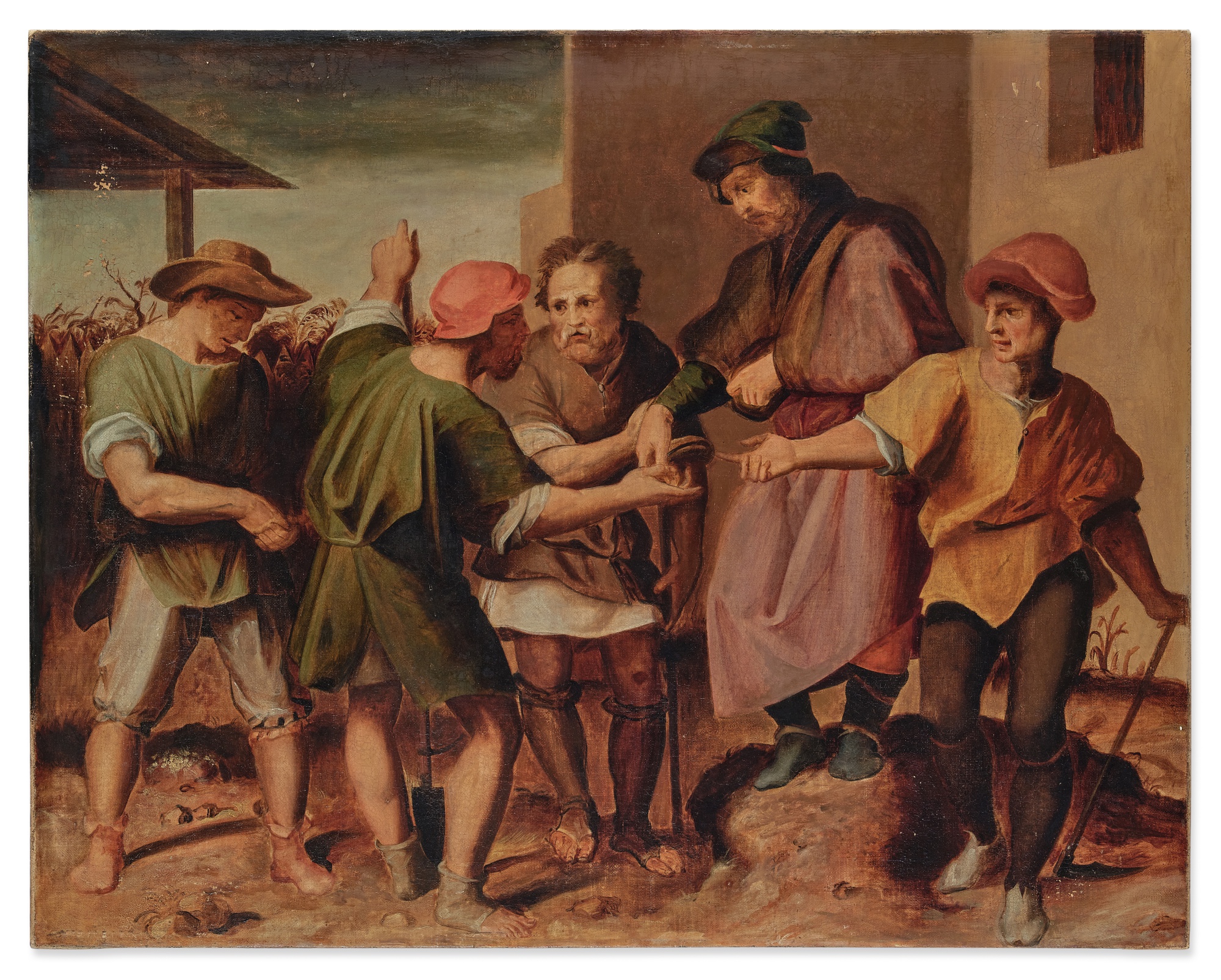
Septuagesima could be called Labor Day in the church. As you know the church calendar doesn’t jive well with the secular calendar. I don’t think any of you is going to get the day off tomorrow because of Septuagesima, but today could be Labor Day because the Gospel reading is all about labor. The text is the laborers in the vineyard.
Now usually when I preach on this text, I skip right over the work part of the parable, that all day long the vineyard owner sought workers for his vineyard, and I jump right to the end. That’s where the parable takes a Biblical twist – the owner of the vineyard has His own weird economy. He pays laborers who worked only an hour a full day’s wages. In fact, everyone but the very first workers, gets a bonus, way more than they deserve. Those first workers, even though they received exactly what they were promised, likely left the vineyard never to return because they couldn’t stand generosity. They wanted the vineyard owner to be fair.
It is in the attitude of those first workers that this parable speaks to our daily work and where this Word of God smacks up against our philosophy, our attitude, and even the goal of our work. So, let’s delve into work using this parable.
First, our Lord expects us to work. After God created the world and everything in it, He put Adam and Eve in the garden to work it. Now, their work was certainly easier than ours – there were no weeds or drought or potato blight. But they worked and their work was their life – they received their daily bread by picking berries and digging potatoes and figuring out what to do with all those zucchini.
Consider this Biblical truth – the God of Holy Scripture is a God who works. He works hard. He sacrifices. And His work and sacrifice flow from His love for you. The God that is found in Scripture is not sitting up in some heavenly palace, surrounded by a thousand young maidens who meet His every demand. He is a God who formed Adam from the dust of the ground, who causes the sun to shine and the rain (or snow) to fall. He sends plagues on the Egyptians, parts the Red Sea, leads His people with a fire and a cloud, fights wars against evil. Throughout the Old Testament He worked hard in His marriage to Israel, to be faithful, to keep her alive, to preserve her from herself and her enemies. In the New Testament He works – He took on human flesh. He fought Satan. He healed the sick, cleansed the lepers, gave sight to the blind, cast out demons. He did not come to be served, but to serve, to work, to suffer, to die and rise again. He worked out your salvation. He accomplished your forgiveness. The wages He earned by His perfect work is your forgiveness, your life. He bought your body back from death and hell with His labor of love.
Note this about the work our Lord does. He doesn’t do it for Himself. He’s not in it so He can retire. His reward, His final payout, is you, and the joy that His work has worked in you – to make you what He created you to be – holy, alive, without sin, in communion with Him for all eternity.
So, in this parable, when the Lord calls people into His Kingdom, He calls them to work. He calls you to work because He is the God who works.
That means your work, whatever you do, as long as it is not sinful, is holy work. To do the work of a mother and father is holy work. You are God’s hands to provide and protect a little child who cannot do those things for himself, to teach your child about her God. If you look in on your elderly neighbor, blow out her driveway, you are doing God’s work to look after the widow. And if you drive a garbage truck or deliver propane – you are doing God’s work – of cleaning up our messes and providing the daily heat we need to live in Minnesota.
Note what is true of all of this work – God has put you in that place for others, to help them, care for them, provide them what they need. Work requires sacrifice – since the fall into sin work is not easy, since everyone you help is a sinner. Your neighbor lady might complain that you didn’t shovel the walk like her husband. Your children might not thank you for staying up all night when they were sick or at the prom. Should this surprise you? What is your most common prayer – thanksgiving or complaint?
Back to the parable. Let’s take a look at the workers in the vineyard to learn about a godly attitude toward work. Those very first workers were probably the best workers the owner could have hoped for. They were up at the crack of dawn. Waiting in the marketplace to be hired. Ready to put in a full day’s labor. But the end of the day reveals something wrong with their hearts. They wanted the owner to be fair. They worked longer than anyone and they wanted more pay than anyone. Now that sounds right in the world, except it is wrong in the Kingdom of heaven.
Those first hour laborers were working for their paycheck, not for the vineyard, not for the Lord, but for themselves. They forgot some simple truths because their hearts were set on themselves– they would have no job were it not for the Lord. They would have no pay were it not for the Lord. Their work was to harvest grapes, not to get a paycheck. The paycheck was promised and the Lord would deliver as He promised and that is what they agreed to.
This past week I read an interesting essay lamenting our attitude toward work. What made it even more interesting is that the essay was given in the first year of WW2 in England by a Christian woman named Dorothy Sayers. Listen to a few things she said about work, “We should not ask, ‘will it pay?’ but ‘is it good?’” “Our work is not, primarily, a thing one does to live, but the thing one lives to do.” She argues that we should want to do good work because God is good. We want to work because that is what God created us to do. The most striking thought she had was that we should approach our work as we do our hobbies, our passions. When it comes to something you love you don’t consider how much it will cost, or how much time it requires, you want it done right, you want the product of your work to be good. If you love to make big meals for a family gathering you don’t count the cost. If you’re a wood carver – you don’t count the hours you whittle away. What prompts such sacrifice, such hard work? Your love either for those you’re serving or the item you’re making. You also have an eye to the end – the festive meal that everyone enjoys, the finished good product that you have made. Consider how different our lives would be if we were more concerned about doing good work than we were about how much we are paid.
One last piece of wisdom she imparts is that it is a mistaken notion that we work to serve our community. She said when you put community first, then your work will be governed by whatever the community wants. She said, first we should make sure our work serves God, and then we should serve our work – do it well, do it right, do it to the best of your ability, not for your paycheck, not for the approval of the community, but because it is what God has given you to do.
Here’s the reason. It is found in the parable of the vineyard, particularly the end of the parable. In the end we’re going to get paid, far more than we deserve. God has called us into His Kingdom and we don’t deserve it. He called us, even when we’ve slept in when it comes to our faith and calling, when we’ve blamed God for our own laziness, indifference, and sin. Like those first workers in that vineyard, we are greedy for gain, thinking we deserve more than the latecomers or lazy workers. At the end we would have nothing were it not for the calling and promises of God in Christ Jesus.
It does us well to remember another truth about the end of the day – everything in your garage, shed, barndominium, and at Charle’s Schwab will be gone. Those are God’s gifts, on loan to you, but one day He will take them back. Only your calling and His promises are sure. He has in store for you the reward of His Kingdom. Amazingly, even if you get called to faith in the last hour of life (I’m not recommending that) He will deliver to you the full wages of Christ’s work — forgiveness, life, and the resurrection – the same thing He promised to the very first workers He called into His Kingdom – His Old Testament people.
So happy Labor Day. Work because the Lord who called you works. Do good work because the Lord is good. Sacrifice because you are called to love God and your neighbor. And remember the only paycheck that lasts is the one earned by Christ for you – the generous gift delivered to you now by faith and at the end of the day in the flesh. In the name of Jesus. Amen.