
Six Days After What?
Matthew 17:1-9
January 25, 2026 anno domini
What has your week been like? What has happened to you in the last six days?
That’s how the text begins – “and after six days.” Six days should remind you of creation. God created the world in six days and on the seventh day Hhe rested. Six days might make you think of this past week. It has been six days since you have been in the Lord’s house. Or 13 if you skipped last Sunday because of the weather. But instead of jumping out of the text to think about creation’s six days or our last six days, we ought to look at Matthew’s Gospel and ask, “Six days after what?”
Six days before the Transfiguration Jesus was having a seminary class with his future apostles. In my day we would have called it Systematics 2. Systems 1 discussed God the Father, systems 2 God the Son, and systems 3 the work of the Holy Spirit. Jesus is teaching His men about Himself, His person and work.
Class is not going well for Jesus and His men. He began by telling them to beware of the leaven of the Pharisees and Sadducees. He was warning them about false doctrine creeping in and corrupting God’s Word – like some toxin that would ruin your food. They heard the word leaven and started wondering about lunch and how they didn’t have any bread. Jesus chastises them and reminds them He had just fed the 5000 and the 4000. He doesn’t want them worrying about lunch, but about Him.
Next, He dives into the doctrine of Christ. “Who do people say that the Son of man is?” That’s a good question and a bad question. It is good because we should know what people think and believe. It’s a bad question because the worst way to do theology is by surveys. Some said Jesus was John the Baptist, others Elijah, others Jeremiah, others one of the prophets. Then Jesus gets the whole classes attention. He could have prefaced the question by saying, “No pressure, but if you get this wrong, you’re going to hell.” The question? “But who do you say that I am?” The Greek could be translated, “But you, who do you say I am?”
Six days before the text Peter gave a wonderful confession. It’s right up there with Thomas declaring to Jesus after the resurrection, “My Lord and my God.” Peter says, “you are the Christ, the Son of the Living God.”
Moments before when the seminary class was worried about lunch Jesus chided them, “O you of little faith, why are you discussing among yourselves the fact that you have no bread?” Now, he commends Peter and his confession to the class,
“Blessed are you, Simon Bar-Jonah! For flesh and blood has not revealed this to you, but my Father who is in heaven. And I tell you, you are Peter, and on this rock I will build my church, and the gates of hell shall not prevail against it. I will give you the keys of the kingdom of heaven, and whatever you bind on earth shall be bound in heaven, and whatever you loose on earth shall be loosed in heaven.” Matthew 16:17–19 (ESV)
The Spirit worked through the Words and deeds of Jesus, to get through Peter’s ears to his heart, to his soul, and from there to his lips. This is the truth upon which the Church stands, which hell cannot destroy, which opens heaven’s door – Jesus of Nazareth is the Christ, the Son of the Living God. Believe that and your sins are forgiven. Believe that and your casket will not hold you. Believe that and you will see God face to face in your resurrected flesh. Those seminary apostle wannabes likely thought class was over. Nothing could top off that Q and A session of Jesus and Peter.
But Jesus wasn’t finished. Before the glory of hell’s defeat and heaven’s welcome would come the cross. From that time Jesus began to show his disciples that he must go to Jerusalem and suffer many things from the elders and chief priests and scribes, and be killed, and on the third day be raised. (Matt 16:21)
Peter, who had boldly confessed the truth of Christ, does not want the cross. He took Jesus aside and began to rebuke him, saying, “Far be it from you, Lord! This shall never happen to you.” Six days before the text, Peter tried to keep Jesus from going to the cross. And Jesus called him on it. Peter went from being blessed in heaven, to being Satan on earth, a hindrance to Jesus. Jesus then gives His seminary class one more lesson, “If anyone would come after me, let him deny himself and take up his cross and follow me. For whoever would save his life will lose it, but whoever loses his life for my sake will find it.”
Now you know what Peter’s week had been like, the glory of a good confession, the shame of not wanting the cross, the call to die to himself and follow Jesus.
How has your week been? What were the last six days like? Did the challenges of your Monday undo the glories of Sunday? Did the Lord invite you to die to yourself for Him? Did He take away a great blessing and let you feel the curse of sin? Maybe this week wasn’t too bad, but you certainly remember a week when you went from glory to suffering, from blessing to curse, from a delightful status quo to some deadly downward spiral – your medical test results came back, your daughter phoned with some tragic news, death visited your house or your family without warning, suddenly, tragically. Or you gave in to sin – you let your anger boil over, you gossiped about a sister in Christ, you drank too much, surfed too dark on the web, skipped going to the Lord’s house for no good reason. Or maybe in the dark and cold of winter depression has set in.
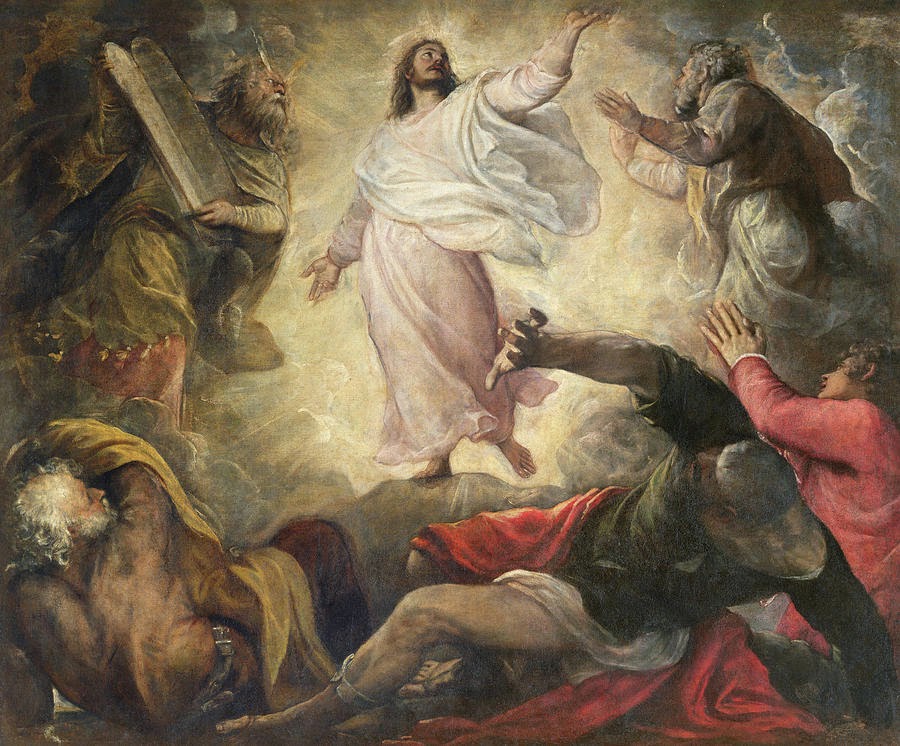
After six days, Jesus took with him Peter, James and John his brother, and led them up a high mountain by themselves. Every six days the Lord would lead you also up a high mountain – with His Word He would lift you from your sins. With His Supper, He would feed you with life and a future.
At His transfiguration three things happened to help Peter, James, and John meet the next six days, and indeed the rest of their lives — whatever came. The Divinity of God shown through the flesh of Jesus. This man, standing before them, was God Himself. Second, Moses and Elijah stood beside Jesus. They were likely there for two reasons – first to testify that Jesus was the fulfillment of the Old Testament – the Law and the Prophets, but also that the promises of God for life and salvation were true and faithful – Moses and Elijah were alive – hundreds of years after they had been taken from earth. Finally, God spoke from the cloud, “This is my beloved Son, with whom I am well pleased. Listen to Him.”
Listen to Jesus. He is God in the flesh. Listen to Him from the cross – it is finished. And remember – this is God Himself speaking. Whatever you faced in the last six days He is the answer to it. Your sins – forgiven. Death – He died it and now it is dead to those who believe. Evil – the world rejected the God who created it in the person of Jesus. They nailed the Son of God to the cross – there is no greater evil. And what did God do with man’s evil? He worked right in the midst of it – accomplishing the world’s salvation in the midst of betrayal, injustice, and gross violence. And if the last six days have brought you suffering – well, then hear these words of Saint Peter, who saw Jesus in His glory at Transfiguration and saw Him die on the cross, and saw Him risen from the dead – this is what he wrote for the Church – for you – “Beloved, do not be surprised at the fiery trial when it comes upon you to test you, as though something strange were happening to you. But rejoice insofar as you share Christ’s sufferings, that you may also rejoice and be glad when his glory is revealed.” You see, the end of suffering is glory – it was for Christ and He promises it will be for you. That’s the sermon for you after the last six days. Listen to Jesus, follow Him through suffering and you will have glory. In His name. Amen.